CREO Seminar Talk: Marc Pollefeys - Grounding AI in the Physical World
Abstract
Spatial and Physical AI aims to enable intelligent systems to perceive, understand, and interact with the three-dimensional world in ways that support people and empower autonomous robots. This talk presents some of recent advances spanning large-scale 3D reconstruction, scene understanding, human activity modeling, and robot learning. We discuss methods for multi-device and multi-session mapping, scalable 3D reconstruction from image collections, efficient visual matching, and feed-forward 3D scene generation using modern foundation models and Gaussian splatting techniques. The presentation highlights advances in open-vocabulary 3D scene understanding, functional and hierarchical scene graphs, and the integration of semantic, geometric, and affordance-based representations. We further explore egocentric perception, collaborative activity understanding, remote assistance, and reconstruction of human behavior from first-person observations. Finally, we demonstrate how these spatial representations enable robot learning and decision-making through large-scale datasets, vision-language reasoning, manipulation, and navigation systems capable of operating in open-world environments. Throughout the talk, we argue that the future of AI in the physical world will require combining geometric reasoning with modern foundation models, leveraging both 2D internet-scale data and emerging spatial memories to build systems that can robustly perceive, understand, and act in complex real-world environments.
We’re excited to welcome Prof. Marc Pollefeys for “Grounding AI in the Physical World.” If you’ve used COLMAP to turn photos into 3D models or LightGlue to match images, you’ve already encountered work from Marc and his collaborators. He also led the team developing the core computer vision behind Microsoft’s HoloLens 2. Join us to hear how advances in 3D vision and foundation models are enabling robots and AI systems to understand and interact with the physical world.
Please join us in person — there will be no Zoom option or recording.
- When: Friday, November 13, 2026, 3:00–4:00 PM ET
- Where: Room 202, 370 Jay Street, Brooklyn
- Speaker: Prof. Marc Pollefeys, ETH Zurich and Microsoft
- Calendar: Add to Google Calendar
About the Speaker
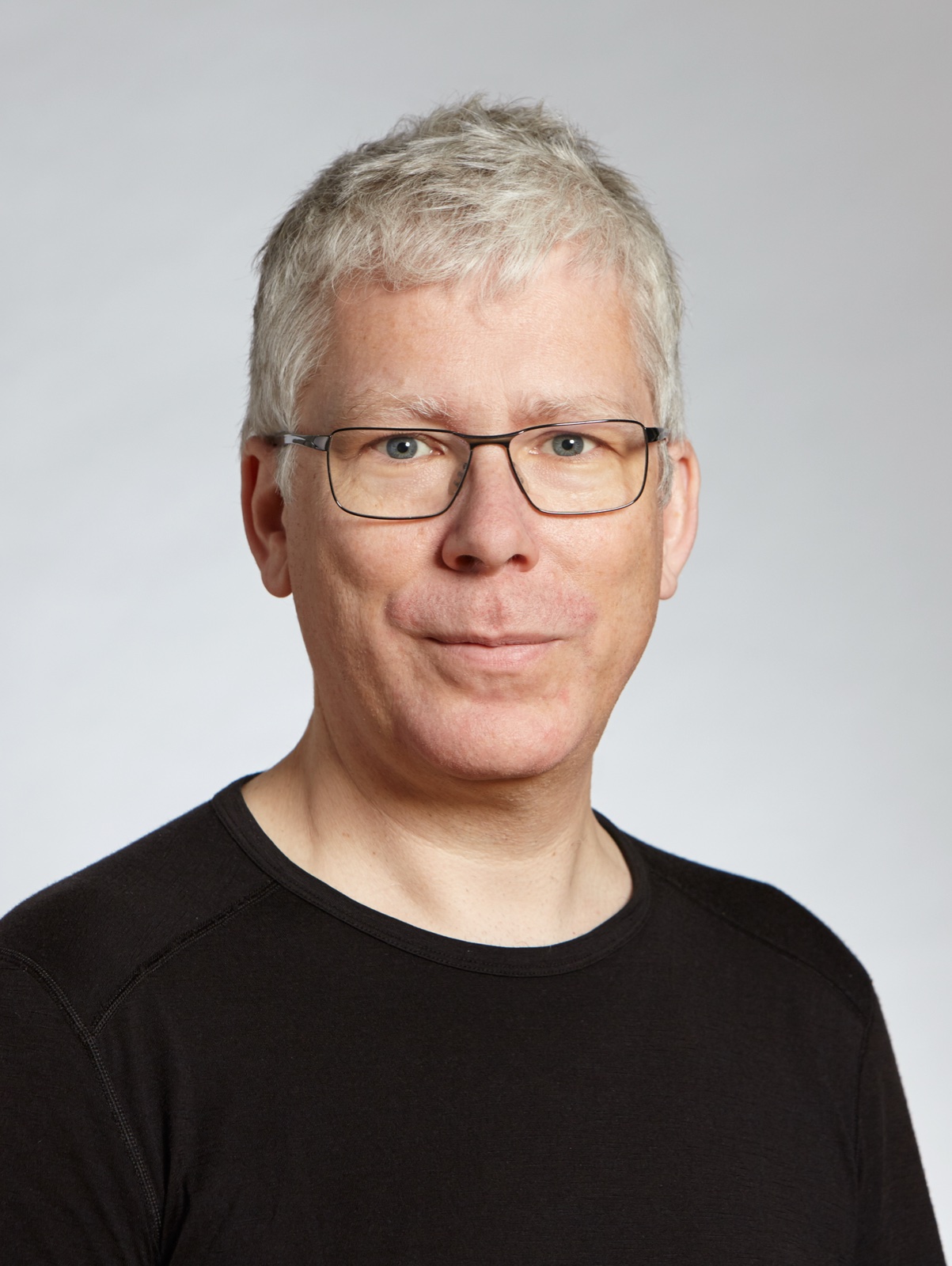
Marc Pollefeys is a Professor of Computer Science at ETH Zurich and the Director of the Microsoft Spatial AI Lab in Zurich. He is a Fellow of IEEE, ACM and ELLIS, as well as a member of the Academia Europaea. He obtained his PhD from the KU Leuven in 1999 and was a professor at UNC Chapel Hill before joining ETH Zurich.
He is best known for his work in 3D computer vision, having been the first to develop a software pipeline to automatically turn photographs into 3D models, but also works on robotics, graphics and machine learning problems. Other noteworthy projects he worked on are real-time 3D scanning with mobile devices, a real-time pipeline for 3D reconstruction of cities from vehicle mounted-cameras, camera-based self-driving cars and the first fully autonomous vision-based drone. At Microsoft he led the team developing the core computer vision algorithms for the HoloLens2 and Azure Spatial Anchors. Most recently his academic research is focusing on egocentric vision and robotics foundation models.